
Video
Search results for 'infopolitics'
picture
Echoes of Tactical Media
picture
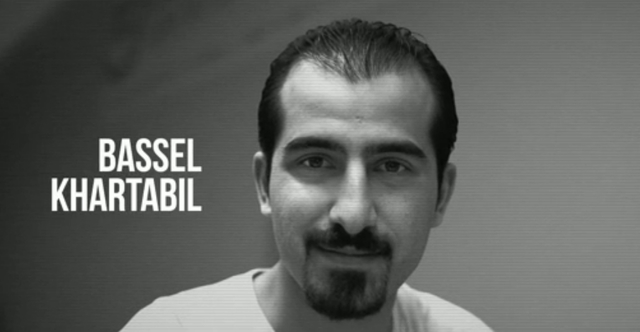
#FREEBASSEL
file
Whistleblowing for Change
Bazzichelli_Whistleblowing for Change.pdf, 26,8 MiB
Whistleblowing for Change Exposing Systems of Power & Injustice Tatiana Bazzichelli (ed.) The courageous acts of whistleblowing that inspired the world over the past few years have changed our perception of surveillance and control in today's information society. But what are the wider effects of whistleblowing as an act of dissent on politics, society, and the arts? How does it contribute to new courses of action, digital tools, and contents? This urgent intervention based on the work of Berlin's Disruption Network Lab examines this growing phenomenon, offering interdisciplinary pathways to empower the public by investigating whistleblowing as a developing political practice that has the ability to provoke change from within. Source: https://www.disruptionlab.org/book
Whistleblowing for Change Exposing Systems of Power & Injustice Tatiana Bazzichelli (ed.) The courageous acts of whistleblowing that inspired the world over the past few years have changed our perception of surveillance and control in today's information society. But what are the wider effects of whistleblowing as an act of dissent on politics, society, and the arts? How does it contribute to new courses of action, digital tools, and contents? This urgent intervention based on the work of Berlin's Disruption Network Lab examines this growing phenomenon, offering interdisciplinary pathways to empower the public by investigating whistleblowing as a developing political practice that has the ability to provoke change from within. Source: https://www.disruptionlab.org/book
event
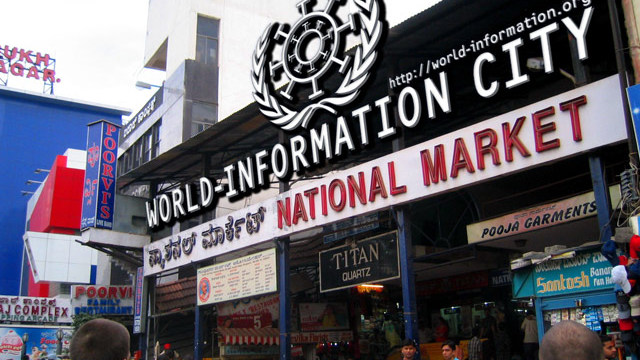
World-Information Amsterdam
World-Information.Org is an trans-national cultural intelligence provider, a collaborative effort of artists, scientists and technicians. It is a practical example for a technical and contextual environment for cultural production and an independent platform of critical media intelligence.
Readevent
WikiLeaks Statement On Edward Snowden's Exit From Hong Kong
WikiLeaks Statement On Edward Snowden's Exit From Hong Kong
Sunday June 23, 17:50 BST
FOR IMMEDIATE RELEASE
Mr
Edward Snowden, the American whistleblower who exposed evidence of a
global surveillance regime conducted by US and UK intelligence agencies,
has left Hong Kong legally. He is bound for the Republic of Ecuador via
a safe route for the purposes of asylum, and is being escorted by
diplomats and legal advisors from WikiLeaks.
article
As power becomes traceable: raising the stakes on critique
Among the many troubling and bizarre features of contemporary politics, the following apparent paradox can be found: Informationalisation has brought along enormous increases in the traceability of the doings and dealings of the powerful. But the disruptive power of the exposure of these activities to the public, today seems especially low. After information technology, the going about of those in power and their abuses, are increasingly documented, and the resulting records are increasingly susceptible to leakage to the public. Email is an obvious example. In the run-up to the last Iraq war, a message by an official of the National Security Agency (NSA), which requested ? aggressive surveillance ? of UN Security Council Members Angola, Cameroon, Chile, Bulgaria and Guinea, made its way to the newspapers.
article
Reverse Contradictionary - Dictionary of New Worlds
The entire cultural output of humanity is being fed into AI. Large Language Models are ingesting not only books, articles, and blogs in their entirety, but also the content of our private written and spoken conversations. LLMs are boiling lakes and burning down forests to generate texts based on statistical mediocrity, which we are supposed to worship as the beginning of a great new gilded age.
Readcampaign
Tactical Media Room
Duration: 19 Apr 2022 - 30 Dec 2022
The Tactical Media Room (TMR) is an initiative of Waag Futurelab and Institute for Network Cultures (HvA), founded in late February 2022 after the Russian invasion in Ukraine. In collaboration with hackers, artists, designers and researchers in The Netherlands, TMR aims to support independent tactical media, journalists, newsrooms and civic initiatives from Ukraine, Russia, and Belarus.
event
TPP Treaty: Intellectual Property Rights Chapter - 5 October 2015
Today, 9 October, 2015 WikiLeaks releases the final negotiated text for the TPP (Trans-Pacific Partnership) Intellectual Property Rights Chapter. The TPP encompasses 12 nations representing more than 40 per cent of global GDP. Despite a final agreement, the text is still being withheld from the public, notably until after the Canadian election on October 19.
Readcampaign
Statement Against the Prosecution of Netzpolitik.org
"The investigation against Netzpolitik.org for treason and their unknown sources is an attack against the free press. Charges of treason against journalists performing their essential work is a violation of the fifth article of the German constitution. We demand an end to the investigation into Netzpolitik.org and their unknown sources."
Readevent
NEURO networking Europe
From February 27th to 29th young artists, filmmak- ers, musicians, theorists and activists from all over Europe and many other parts of the world meet at the Muffathalle in Munich for NEURO; a number of events, speeches, discussions, presentations, performances, concerts and actions reflecting the pulse of the age. About two years after the first make-world festival, NEURO will again interface with current debates around migration and mobility, racism and nationalism, civil society and global mobilisation, networking and new technologies, informatisation and precarious labour, education and control society, common organising, and digital culture.
Readarticle
TPB AFK: The Pirate Bay Away From the Keyboard
Viva La Piracy! An intellectual freedoms documentary based around the interpersonal triumphs, and defeats of the three main characters against the largest industry in the known universe. The media industry.
Readpicture
Echoes of Tactical Media
picture
#FREEBASSEL
picture
How much of this is fiction
picture
WikiLeaks
campaign
Tactical Media Room